
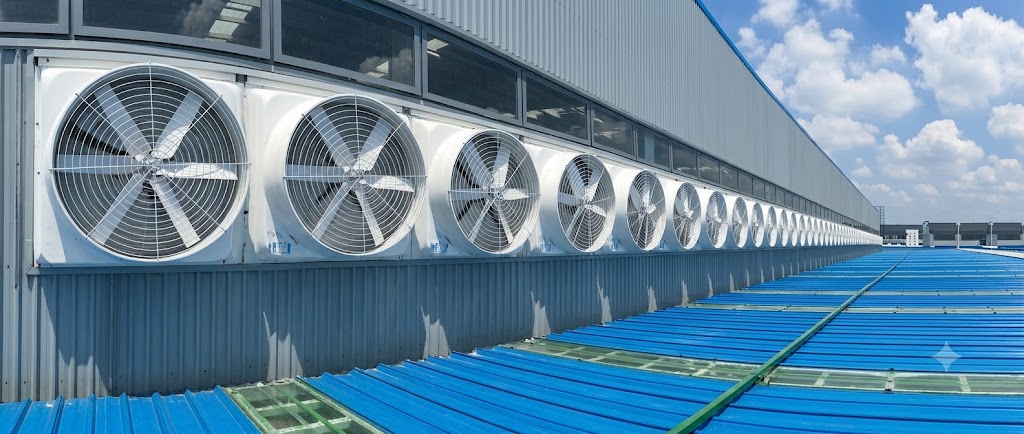
Introduction
Industrial fans play an important role in maintaining proper airflow, ventilation, and temperature control in commercial and industrial environments.
Whether you operate a manufacturing unit, warehouse, factory, workshop, or commercial facility, choosing the right industrial fan can significantly
improve air circulation, workplace comfort, and overall operational efficiency. With different types, sizes, and capacities available, selecting a
fan that suits your space and requirements is essential.
1. Understand Your Space and Ventilation Requirements
Before choosing an industrial fan, consider the size and layout of your space. Large warehouses and manufacturing facilities require fans with higher airflow capacity, while smaller workshops may need compact ventilation solutions. Understanding the area's dimensions, ceiling height, and ventilation requirements will help you select a fan that delivers effective air circulation.
2. Choose the Right Type of Industrial Fan
Different industrial fans are designed for specific applications. Axial fans are suitable for general ventilation and moving large volumes of air, while centrifugal fans are ideal for applications requiring higher air pressure. Exhaust fans help remove hot air, smoke, dust, and unwanted fumes from enclosed spaces. Selecting the right type ensures better performance and efficient airflow.
3. Consider Airflow Capacity and Fan Size
Airflow capacity is one of the most important factors when selecting an industrial fan. It is generally measured in CFM (Cubic Feet per Minute) or CMH (Cubic Metres per Hour). A fan with insufficient capacity may not provide adequate ventilation, while an oversized fan can consume unnecessary energy. Always consider your space requirements and the desired air exchange rate before making a decision.
4. Focus on Energy Efficiency
Industrial fans often operate for extended hours, making energy consumption an important consideration. Choosing an energy-efficient fan can help reduce electricity costs while maintaining consistent airflow. Look for fans with efficient motors, suitable operating speeds, and reliable performance. Variable speed options can also help adjust airflow according to changing operational requirements.
5. Check Noise Levels and Installation Requirements
Noise levels should not be overlooked, especially in workplaces where employees operate machinery or perform tasks requiring concentration. Consider the fan's operating noise, mounting options, available space, and installation requirements. Proper positioning and professional installation can improve airflow distribution while reducing unnecessary noise and vibration.
Conclusion
Choosing the right industrial fan involves more than simply selecting a model based on size or price. Factors such as space requirements, airflow capacity, fan type, energy efficiency, noise levels, and durability all contribute to its overall performance. By carefully evaluating these considerations, you can invest in an industrial ventilation solution that improves workplace comfort, supports efficient operations, and provides long-term value. A properly selected industrial fan helps create a safer, more comfortable, and better-ventilated working environment.